Holter Monitoring in Lucknow — 24-Hour ECG
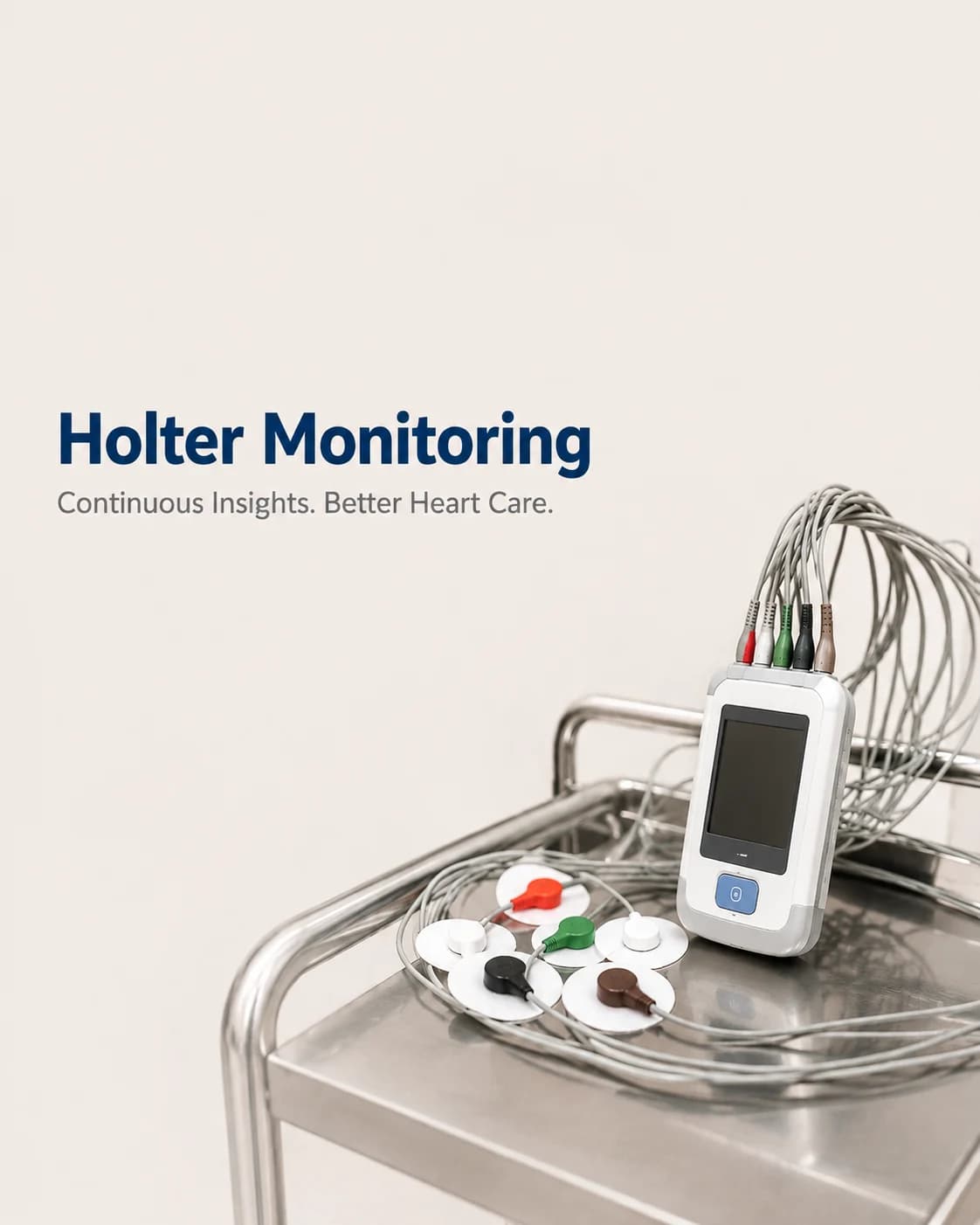
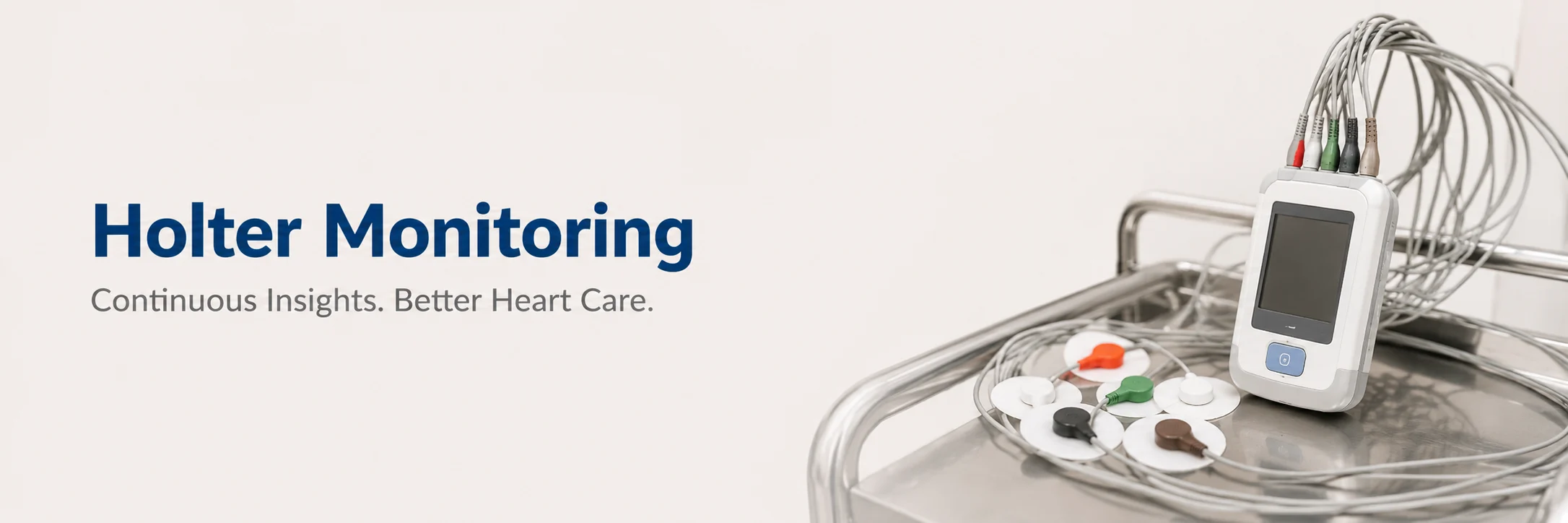
A wearable ECG that records your heart across a full day of normal life.
A Holter monitor is a small, wearable ECG that you take home and wear for a full day or two. Palpitations and rhythm disturbances often come and go, and a standard ECG — a few seconds long — can easily miss them. A Holter watches continuously, so it catches what happens when you are not in the clinic.
At Charak, the monitor is fitted, worn through your ordinary routine, and the recording is then analysed and reported by a cardiologist. You keep a simple diary of symptoms, so anything you feel can be matched to exactly what your heart was doing at that moment.
Why 24 hours beats a few seconds
The value of a Holter is time. An intermittent skipped beat or a burst of fast rhythm may appear only a handful of times a day — invisible to a brief ECG, but caught by a monitor that never stops recording.
Matching your symptom diary to the trace is the other half: if you note a palpitation at a certain time, the cardiologist can look at precisely that moment and see whether the heart's rhythm explains it.
Holter monitoring may be recommended for
- Palpitations that come and go
- Unexplained dizziness or fainting spells
- Checking a known rhythm problem or the effect of its treatment
- Assessing the heart rate over a full day
- Symptoms that a standard ECG has not captured
How to prepare
There is no fasting and no restriction on your day — in fact, living normally is the point, so the monitor records your heart during your usual activities.
- Bathe or shower before the monitor is fitted, as it must stay dry once on
- Wear a loose top; the small device clips to your belt or hangs on a strap
- Go about your normal day and note the time of any symptom in the diary provided
- Avoid getting the electrodes and device wet while you wear them
What to expect
- 01
Fitting
A few electrodes are placed on the chest and connected to the small recorder, which you wear on a belt or strap.
- 02
Living normally
You go home and carry on with your usual routine while it records, keeping a note of any symptoms.
- 03
Returning it
After 24 or 48 hours you return the device to the centre — it is simply unclipped.
- 04
Analysis
The full recording is analysed and reported by a cardiologist, with your symptom diary alongside.
Common questions
Can I go about my normal day with a Holter monitor?
Yes — that is the whole idea. You carry on with your usual routine so the monitor records your heart during ordinary life, which is exactly when intermittent symptoms tend to occur.
Can I bathe or shower while wearing it?
No, the monitor and its electrodes must stay dry, so bathe before it is fitted and avoid getting it wet while wearing it. It is only for a day or two.
Why keep a symptom diary?
Noting the time of any palpitation, dizziness or discomfort lets the cardiologist look at exactly that moment in the recording and see whether your heart's rhythm explains what you felt.