
Digital X-Ray in Lucknow
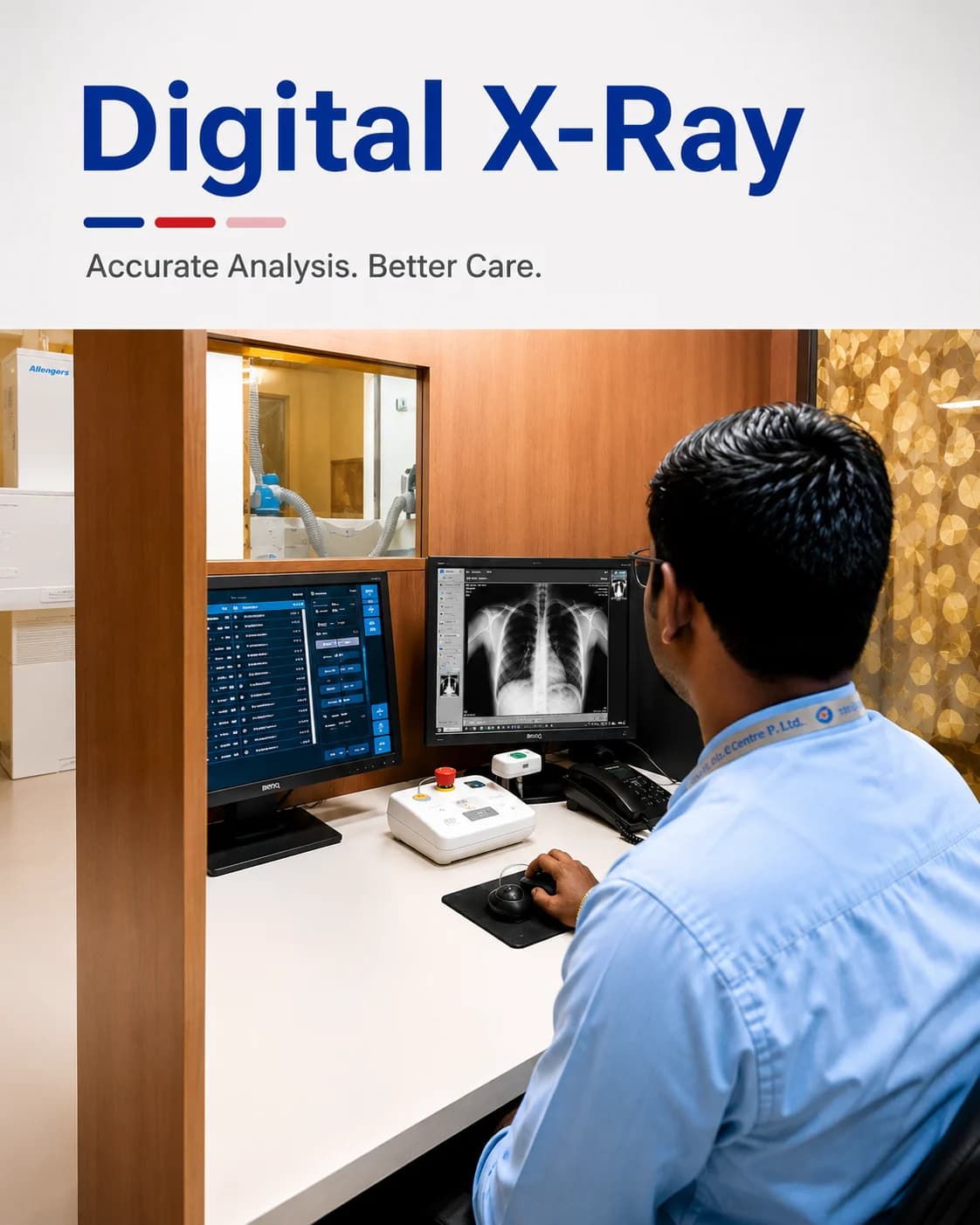
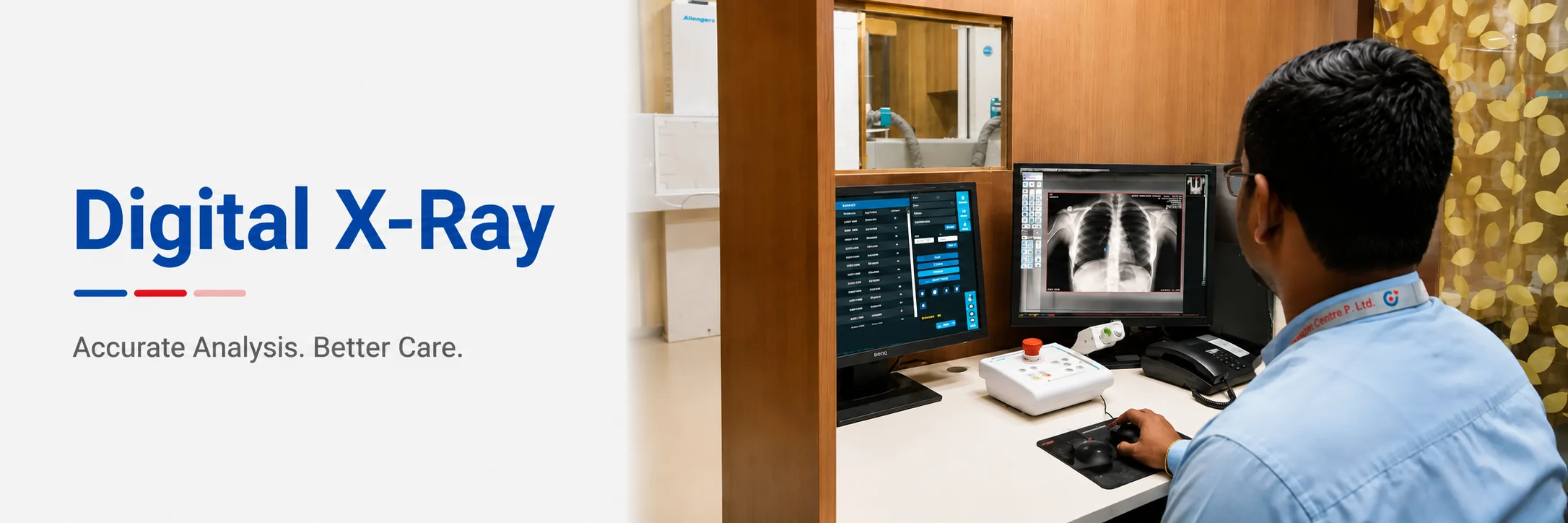
Fast, low-dose imaging of the chest, spine, abdomen and bones — with no film to wait for.
A digital X-ray is the quickest and most common imaging test, using a small, carefully controlled dose of radiation to picture bones and the chest. Digital capture means the image appears on the reporting workstation within moments — there is no film to develop and rarely a repeat for exposure reasons.
It is often the first step: a chest X-ray for a cough or breathlessness, a bone X-ray after an injury, or a spine film for persistent pain. When it answers the question, nothing more is needed; when it does not, it guides which scan comes next.
What a digital X-ray shows
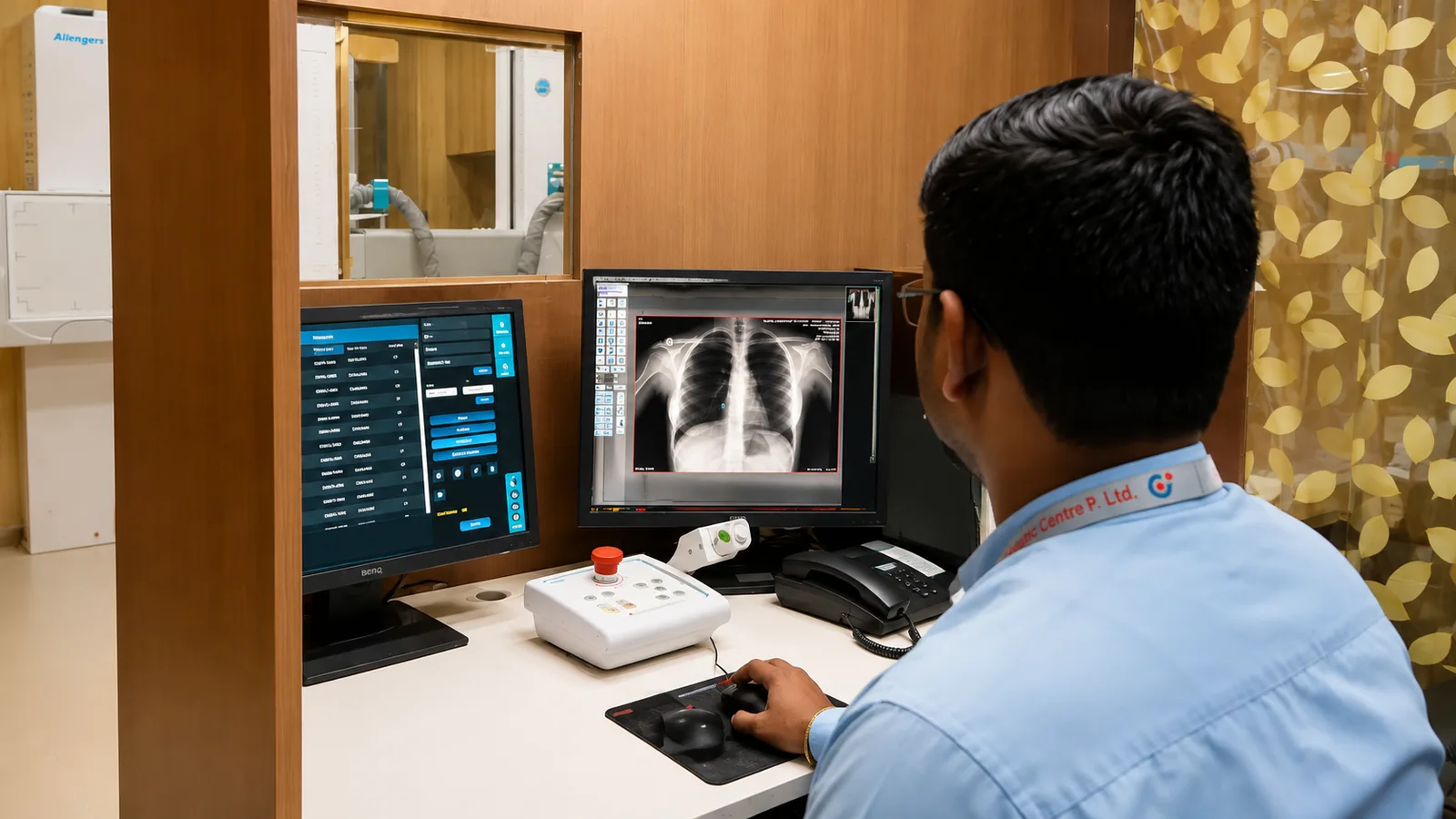
X-rays pass easily through soft tissue but are absorbed by dense structures like bone, which is why they show fractures, lung infections, and the alignment of the spine so clearly.
Because the image is digital, it can be shared with your treating doctor immediately and adjusted on screen to bring out detail, rather than being fixed on a printed film.
Your doctor may recommend an X-ray for
- A cough, fever or breathlessness — chest X-ray
- A suspected fracture or bone injury
- Persistent joint or back pain
- Follow-up of a healing fracture or a known chest condition
- A pre-operative or pre-employment health check
How to prepare
There is almost no preparation for a routine X-ray. If you are or might be pregnant, tell the radiographer before the exposure.
- Wear clothing free of metal buttons, zips or embroidery over the area being imaged
- Remove jewellery and any metal accessories near the area
- No fasting is needed
- Bring any previous X-rays for comparison if you have them
What to expect on the day
- 01
Positioning
The radiographer positions you against or in front of the detector — standing, sitting or lying, depending on the view.
- 02
The exposure
You hold still, and for a chest film hold your breath, for a fraction of a second while the image is captured.
- 03
Checking the image
The digital image appears at once, so any repeat for positioning is done immediately rather than at a second visit.
- 04
Reporting
A consultant radiologist reviews and reports the film, and it is available to share with your doctor.
Common questions
How much radiation is in an X-ray?
A routine X-ray uses a very small, carefully controlled dose — a chest X-ray is roughly the amount of natural background radiation you receive over a few days. Digital capture keeps repeats, and therefore dose, to a minimum.
Do I need an appointment for an X-ray?
Many X-rays can be done as a walk-in during opening hours, though booking ahead means less waiting. A referral from your doctor is usually needed.
How soon will I get the result?
The image is ready within minutes, and the consultant report is typically available the same day.
From the health library
Plain-language guides written by the team here — what the test measures, how to prepare, and what the result means.
 TB testing in Lucknow: which test confirms it, and why the old ones misleadTB is common, curable and frequently diagnosed late. Which test actually confirms it — and which widely sold test should never be used.6 min read
 Uric acid and joint pain in Lucknow: when it is gout and when it is notA raised uric acid on a routine panel is common and usually not gout. Which joint pain actually points to it, and what else to check.5 min read
- Winter air in Lucknow: the cough that will not go, and which tests helpEvery winter the same cough arrives and stays for weeks. When it is just the air, and when it is worth investigating.5 min read
Related services
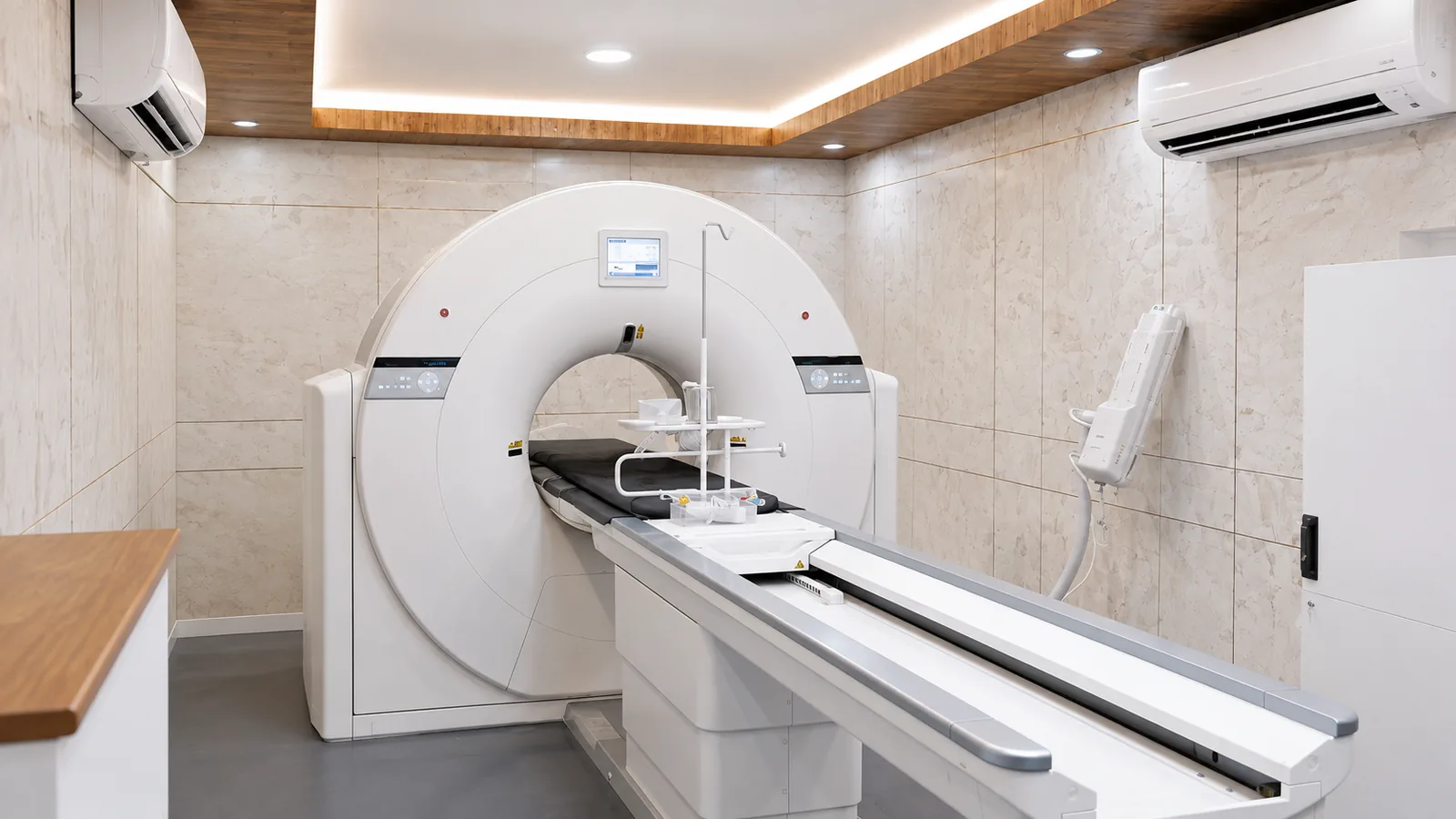
CT Scan
Fast, high-resolution cross-sections of the head, chest, abdomen and blood vessels.
Read more →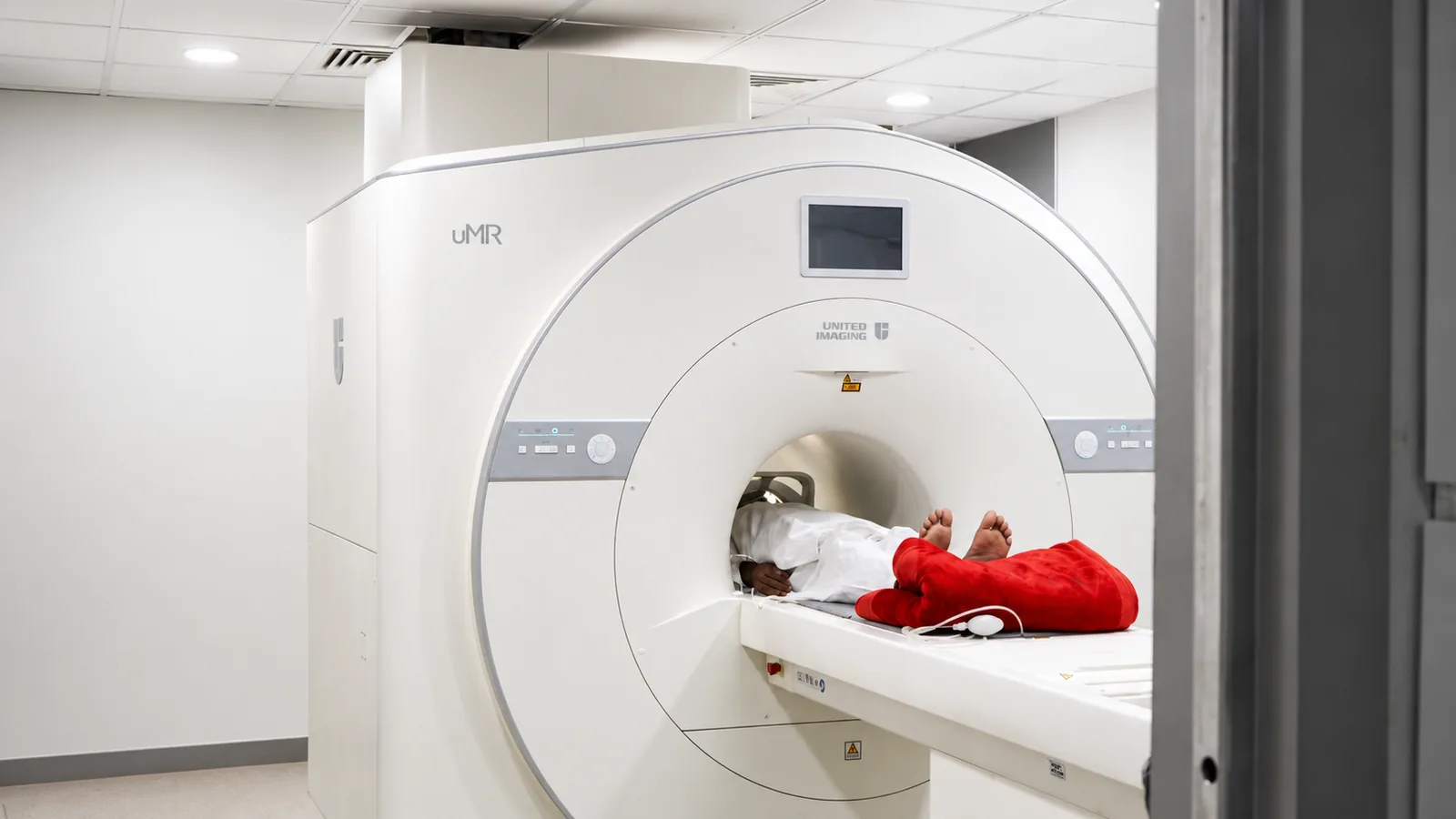
MRI
Detailed, radiation-free imaging of the brain, spine, joints and soft tissue.
Read more →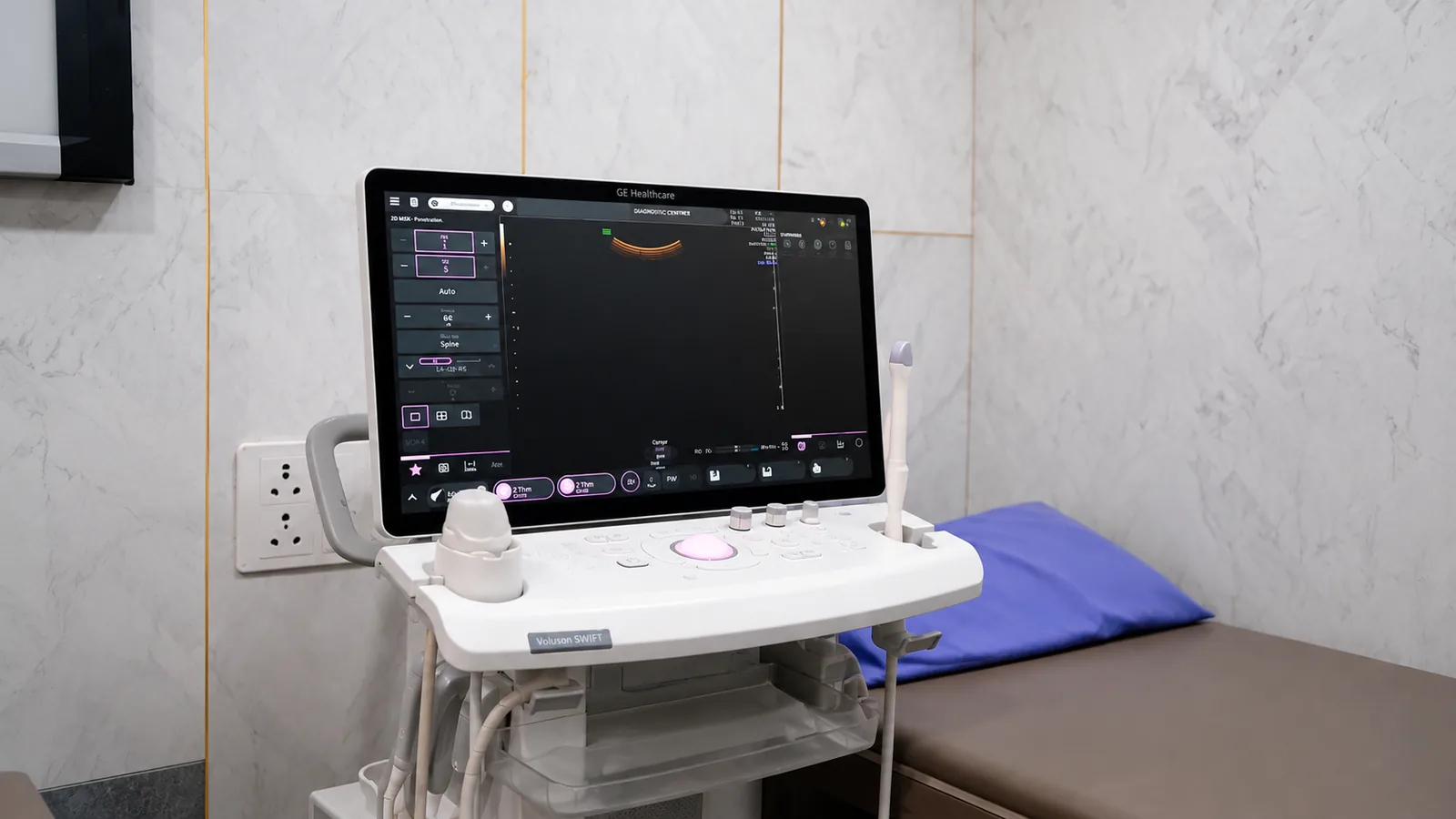
Ultrasound & Doppler
Safe, radiation-free imaging of the abdomen, pelvis, pregnancy and blood flow — in real time.
Read more →