
ECG in Lucknow — Electrocardiogram
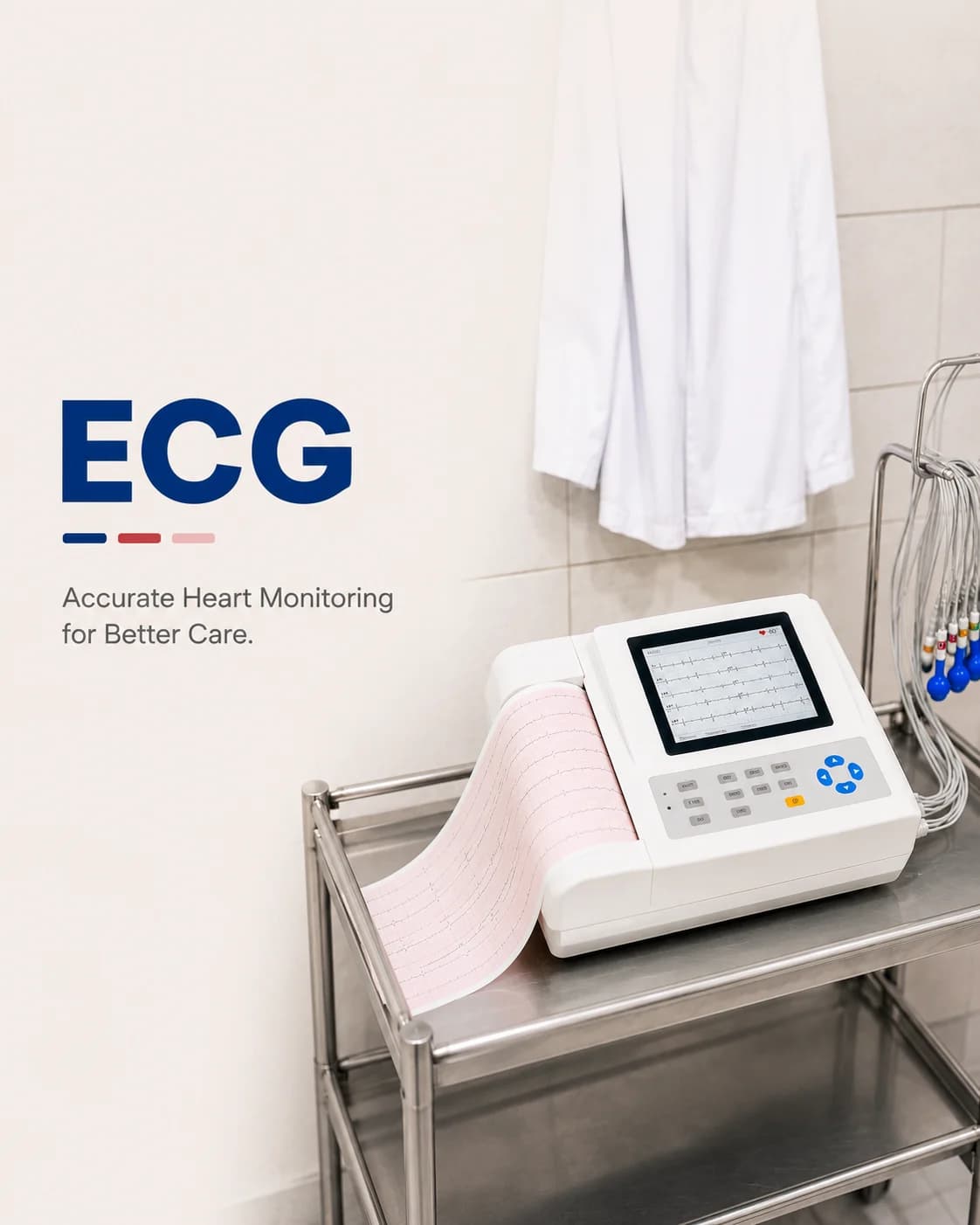
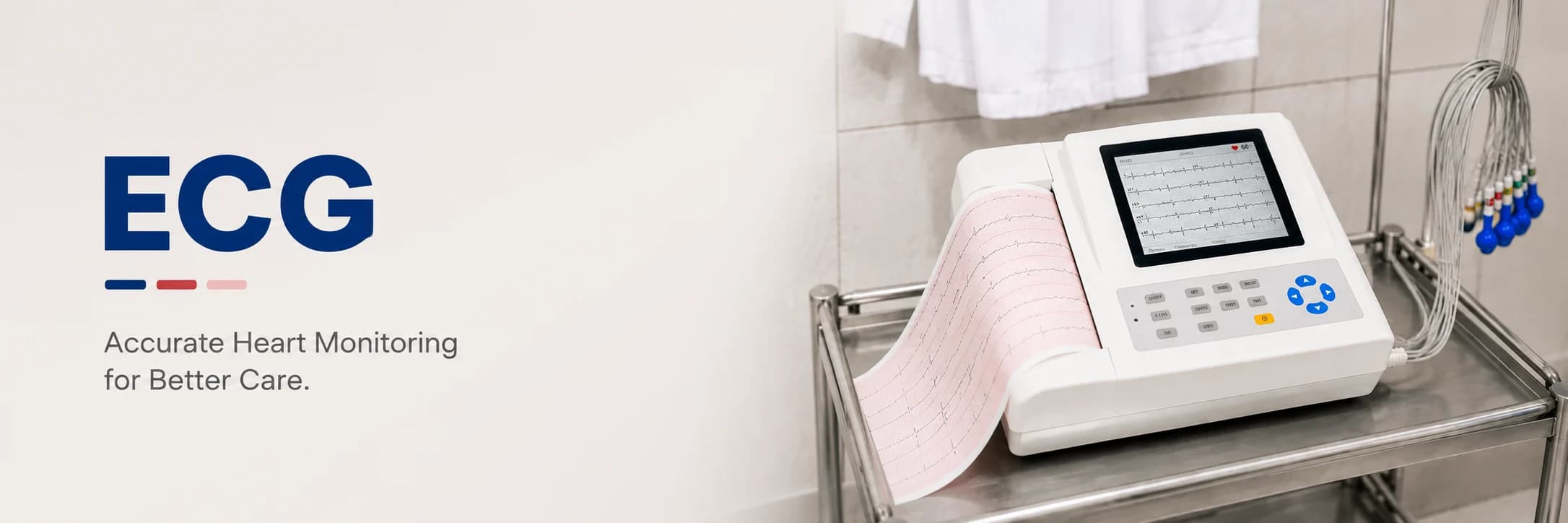
A quick, painless recording of the heart's electrical activity.
An ECG (electrocardiogram) records the electrical signals that make your heart beat. It takes only a few minutes, causes no discomfort, and is one of the most useful first tests in all of medicine — from chest pain in the emergency room to a routine check before surgery.
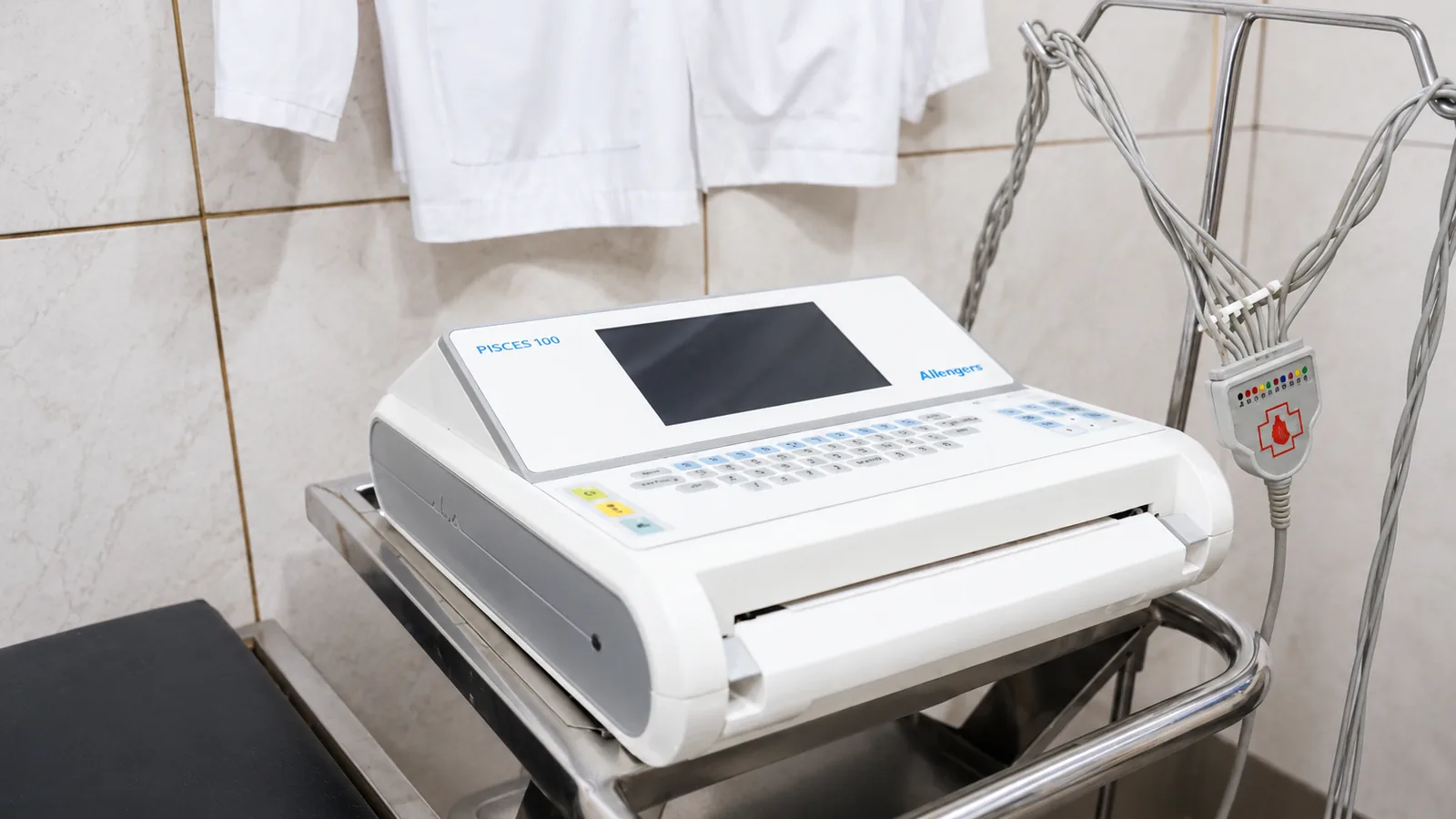
At Charak, a 12-lead ECG is recorded by trained staff and made available for a doctor's interpretation quickly. It can catch an abnormal rhythm, signs of a strain on the heart, and the changes of a heart attack, all from a simple, non-invasive trace.
What an ECG can show
The trace shows the rate and rhythm of the heart, and whether the electrical signal is travelling through it normally. An irregular rhythm, an old or ongoing heart attack, and a thickened or strained heart muscle can all leave a signature on the ECG.
Because it is so quick and harmless, it is the natural first step whenever the heart is in question — and often the test that decides whether something more detailed is needed.
An ECG may be recommended for
- Chest pain or tightness
- Palpitations or a feeling of an irregular heartbeat
- Breathlessness, dizziness or fainting
- A routine check before surgery or as part of a health package
- Monitoring a known heart condition or the effect of medication
How to prepare
An ECG needs almost no preparation and can usually be done as a walk-in.
- No fasting is required
- Wear a top that is easy to remove, as small electrodes are placed on the chest, arms and legs
- Avoid heavy skin cream or oil on the chest on the day, as it can affect electrode contact
- Take your medicines as usual unless your doctor says otherwise
What to expect
- 01
Electrode placement
Small sticky electrodes are placed on your chest, arms and legs — this is painless.
- 02
The recording
You lie still and relaxed for a few seconds while the machine records the heart's electrical activity.
- 03
That's it
The electrodes are removed and you can dress and leave immediately — the whole thing takes a few minutes.
- 04
Interpretation
The trace is reviewed by a doctor, and the result is available the same day.
Common questions
Does an ECG hurt?
Not at all. Small sticky electrodes are placed on the skin and simply record the heart's own electrical signals. Nothing is passed into the body and there is no sensation during the recording.
How long does an ECG take?
The recording itself takes only a few seconds, and the whole visit a few minutes. It is one of the quickest tests there is.
Do I need to prepare or fast for an ECG?
No fasting or special preparation is needed. Just wear a top that is easy to remove, and avoid heavy cream or oil on the chest so the electrodes make good contact.
From the health library
Plain-language guides written by the team here — what the test measures, how to prepare, and what the result means.
 Lipid profile explained: LDL, HDL, triglycerides and what your number meansThere is no single healthy cholesterol number. What each line measures, and why your target depends on everything else about you.6 min read
 Health checkup for older parents in Lucknow: what actually matters after 60The panel that matters after 60 is not the same as the one at 35. What to include, what to skip, and how to avoid the trip.6 min read
- Heart checkup in Lucknow: ECG, echo or TMT — which one do you need?Four cardiac tests that sound interchangeable and are not. What each one actually looks at, and which symptom points to which.6 min read
Related services
2D Echocardiography
A live ultrasound of the heart — its chambers, valves and pumping strength.
Read more →TMT / Stress Test
Recording the heart under the controlled stress of exercise, to reveal what rest hides.
Read more →Holter Monitoring
A wearable ECG that records your heart across a full day of normal life.
Read more →