Health Library / Blood tests
Anaemia in Lucknow: why haemoglobin alone is not the whole answer
· 6 min read · Lucknow
Anaemia is one of the most common findings on any routine blood test in India, and it is particularly common in women of reproductive age. The usual response — start iron — is right often enough that it has become automatic, and wrong often enough to matter.
Haemoglobin tells you that oxygen-carrying capacity is low. It does not tell you why, and the why decides the treatment.
The clues already in your CBC
The red cell indices reported alongside haemoglobin narrow the cause before any extra test is ordered. MCV describes average red cell size, and it splits anaemia into three useful groups.
Small cells (low MCV) point toward iron deficiency or thalassaemia trait — both common here. Large cells (high MCV) point toward B12 or folate deficiency, and sometimes thyroid or liver disease. Normal-sized cells with a low haemoglobin often mean chronic disease, kidney disease, or recent blood loss.
- Low MCV — iron deficiency, thalassaemia trait
- High MCV — vitamin B12 or folate deficiency, hypothyroidism, liver disease
- Normal MCV — anaemia of chronic disease, kidney disease, acute blood loss
The tests that name the cause
Ferritin is the best single measure of iron stores, and it is the test that distinguishes true iron deficiency from a thalassaemia trait that looks similar on a CBC. One caution: ferritin also rises with any inflammation or infection, so it can read falsely normal in someone who is genuinely iron deficient and unwell at the same time. A CRP alongside helps interpret it.
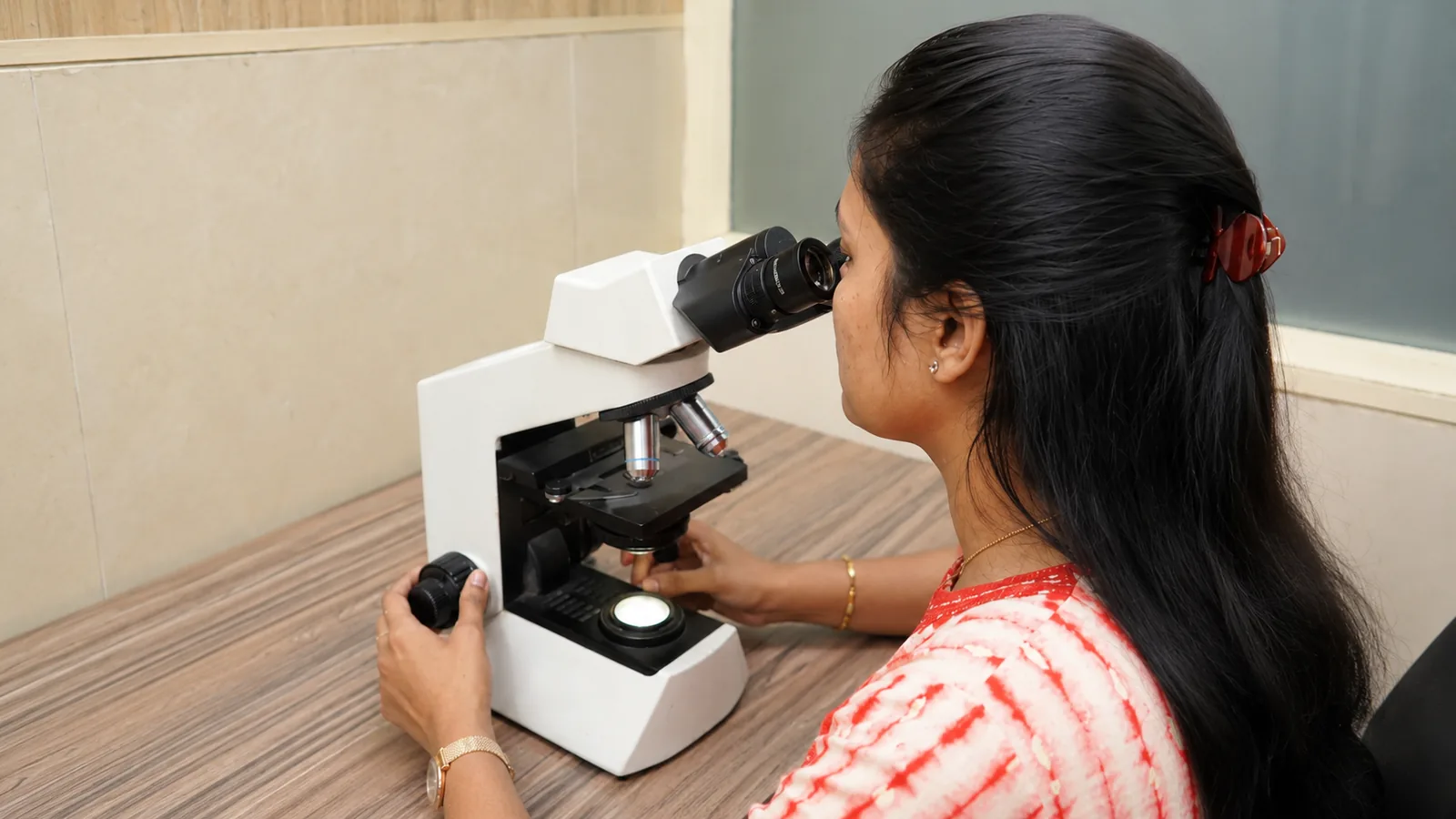
B12 and folate are worth checking when cells are large, and in anyone on a strictly vegetarian diet, which makes B12 deficiency substantially more likely. A peripheral smear — a technologist actually looking at the cells — adds information no analyser number does, and is where thalassaemia and some other conditions first show themselves.
Why the cause matters before the iron
Iron given to someone with thalassaemia trait rather than iron deficiency does not help and, taken long term without need, can do harm. Iron given to someone whose real problem is B12 deficiency treats the wrong deficiency and can delay a diagnosis where nerve damage becomes permanent if left too long.
There is a more important reason still. In an adult man, or a woman past menopause, new iron deficiency anaemia is not a nutritional finding — it usually means blood is being lost from somewhere, most often the gut. That needs investigating rather than supplementing. This is the single most important sentence in this article.
This article is general health information, not a diagnosis or a treatment plan. Test results are read alongside your symptoms and history — please discuss yours with your doctor. See our disclaimer.