Health Library / Scans & imaging
CT scan in Lucknow: preparation, contrast and radiation, explained
· 6 min read · Lucknow
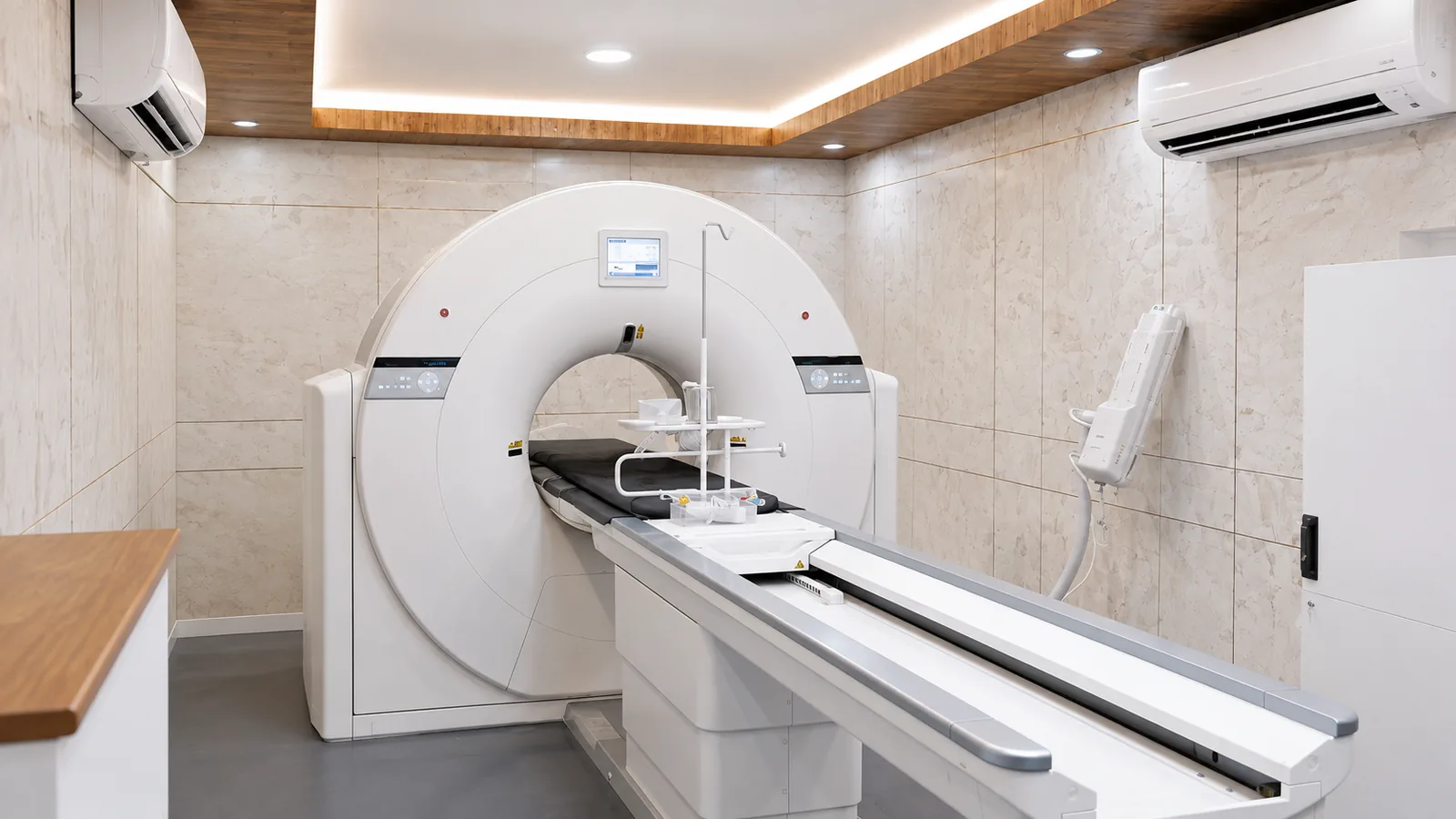
A CT scan is an X-ray that builds cross-sections instead of a single flat image. It is fast — often under a minute of actual scanning — and it is very good at things an ordinary X-ray struggles with: bleeding, stones, chest and abdominal detail, and injury after trauma.
Two questions come up almost every time someone books one in Lucknow: do I need contrast, and how much radiation is this. Both deserve straight answers.
Preparing for it
Preparation depends on whether contrast is being used. For a plain CT — a head CT, most CT for stones, many chest scans — there is usually nothing to do beyond turning up and removing metal from the area being scanned.
For a contrast study you will normally be asked not to eat for four to six hours beforehand, though you can usually keep drinking water. Tell the centre in advance if you have kidney disease, diabetes (particularly if you take metformin), asthma, or have ever reacted to contrast before — a recent creatinine or eGFR is often requested so kidney function is known before contrast is given.
- Bring the referral and any previous scans of the same area
- Remove jewellery, and avoid clothing with metal fasteners over the scan area
- Tell the centre if you are or might be pregnant
- Mention diabetes medication, kidney problems, asthma, or previous contrast reactions
The radiation question, answered honestly
A CT does use ionising radiation, and more of it than a plain X-ray. That is a real consideration and it is why a CT should be done for a reason rather than as reassurance — 'just to check everything' is not a good reason to scan.
It is also worth keeping in proportion. The dose from a single diagnostic CT is small, and modern scanners use dose-reduction techniques as standard. When a doctor orders a CT for a specific question — a suspected stone, a possible bleed, chest symptoms that need answering — the information gained almost always outweighs the risk of that scan. The judgement is your doctor's, and it is a judgement worth asking about if you are unsure.
Children and pregnancy are handled differently and more cautiously, which is why pregnancy must be declared before any CT.
CT or MRI?
They answer different questions, and one is not simply better. CT is faster and generally better for bone, acute bleeding, lung detail, kidney stones and trauma. MRI is better for soft tissue — brain detail, spinal discs and cord, ligaments and cartilage — and uses no radiation.
Your doctor chooses based on the question being asked. If you have been referred for one and are wondering why not the other, that is a reasonable thing to ask at the point of referral rather than at the scanner.
This article is general health information, not a diagnosis or a treatment plan. Test results are read alongside your symptoms and history — please discuss yours with your doctor. See our disclaimer.