Health Library / Scans & imaging
MRI scan in Lucknow: what to check before you book one
· 7 min read · Lucknow
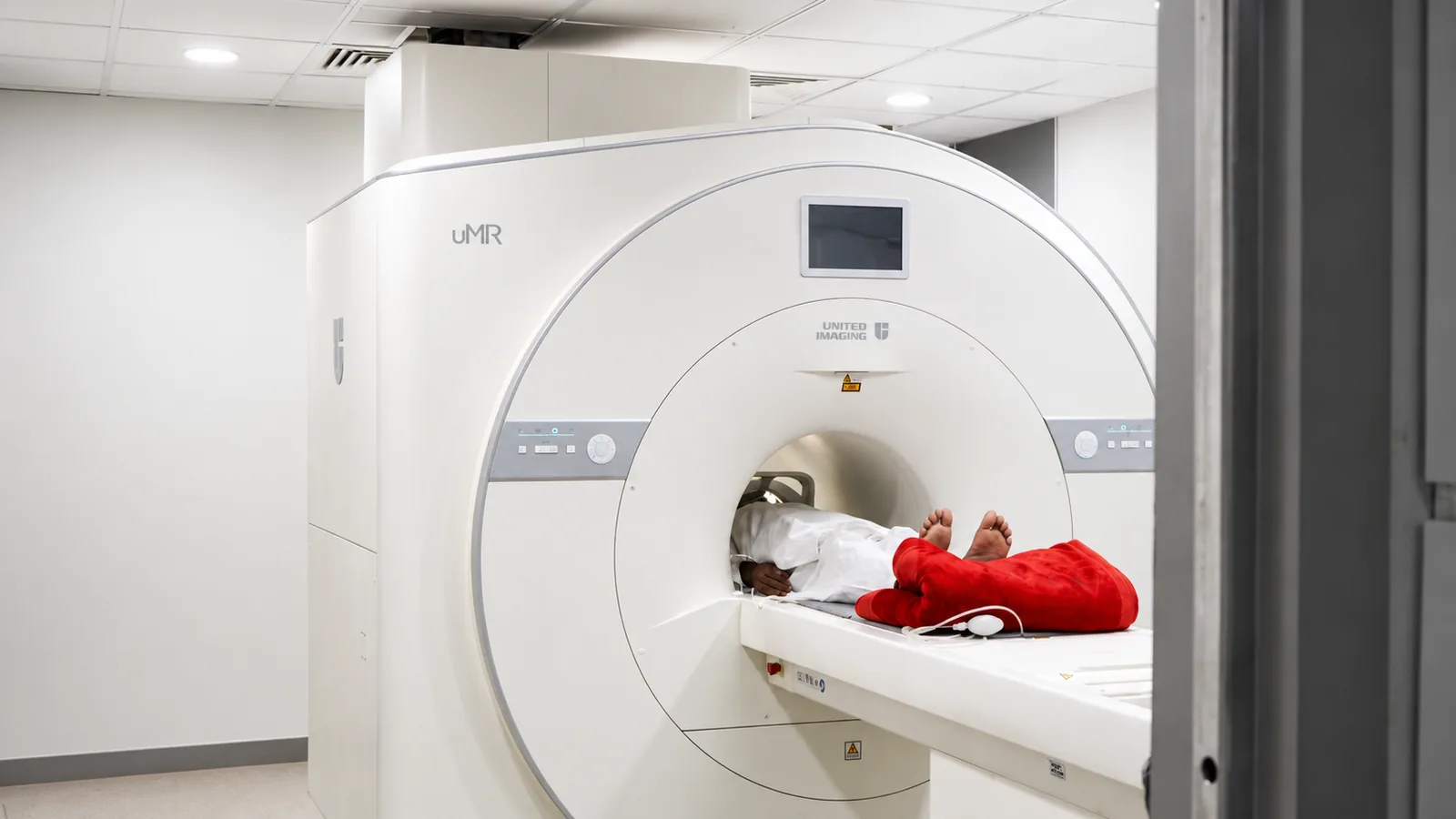
An MRI is usually ordered because something needs to be seen in detail that an X-ray or ultrasound cannot show — a disc pressing on a nerve, a knee ligament, a change in the brain. It uses a strong magnetic field and radio waves, not radiation.
Most people booking one in Lucknow are doing it in a hurry, on a referral they have not had time to ask questions about. These are the questions worth asking anyway, because a few of them change whether the scan is useful at all.
Ask what the scan is actually looking for
An MRI of the lumbar spine and an MRI of the brain are different appointments with different protocols and different durations. The referral usually says which region, but it is worth confirming that the centre is scanning the region and the sequences your doctor wants — particularly for specialised requests like an MRCP, an MR angiogram, or a contrast study.
Sending the right prior imaging with you matters too. If you have had an earlier MRI or CT of the same area, bring it. A radiologist comparing today's scan with last year's can often say something far more useful than one reading today's alone.
The safety questions, which are not optional
The magnet is always on. That is why the safety screening before an MRI is thorough, and why you must declare anything metallic or electronic in your body even if it was implanted decades ago.
- A pacemaker, defibrillator or implanted cardiac device
- A cochlear implant, or any implanted neurostimulator or pump
- Aneurysm clips, coils or stents, and any surgical implant or prosthesis
- Metal fragments in the eye, or a history of metalwork injury
- Pregnancy, or the possibility of it
- Kidney disease — relevant if contrast is being considered
- Claustrophobia, which is common and worth mentioning in advance rather than on the day
What the appointment is actually like
You lie still on a table that moves into the scanner. It is loud — a series of knocking and buzzing sounds — and you will be given ear protection. Most scans take somewhere between twenty and forty-five minutes depending on the region and whether contrast is used.
Staying still is the single thing that determines image quality. Movement blurs an MRI more than it blurs most other imaging, and a blurred sequence usually has to be repeated, which makes the appointment longer rather than shorter.
If contrast is needed, it is given through a cannula partway through. Gadolinium contrast is generally well tolerated; your kidney function may be checked first, which is why a creatinine or eGFR is sometimes requested before the appointment.
Who reads it, and how long that takes
The scan is only half the service. What you are paying for is the report, and who signs it matters — a consultant radiologist's read is what a treating doctor will act on.
At Charak, MRI sits in the same building at Chowk as CT, ultrasound, pathology and cardiac testing, and scans are reported by consultant radiologists. If your doctor needs the result urgently, say so when you book rather than after the scan — reporting can usually be prioritised when the centre knows in advance.
This article is general health information, not a diagnosis or a treatment plan. Test results are read alongside your symptoms and history — please discuss yours with your doctor. See our disclaimer.